

Your new job may have a start date before your new life has an address.
That is when the home search can get ahead of the move. You start saving kitchens and comparing backyards while bigger questions remain open: where your week will happen, what the location will cost, and how much you need to understand before committing.
The first step in relocating to Maryland is not choosing a house. It is finding the places where your life works—and deciding how much you need to learn before buying.
Sometimes that leads directly to a purchase. Sometimes it means renting first. Either can be a deliberate decision. The mistake is letting the moving truck's schedule choose a long-term location for you.
Start With an Arrival Plan, Not a Statewide Search
Before opening another listing, write a one-page brief. Include the actual worksite, required office days, the time you need to arrive, and the commitments waiting at home. Add the other household member's schedule, where relevant, rather than solving one commute and hoping the other follows.
Separate firm dates from preferences. A job start date, lease expiration, or agreed possession date is different from wanting everything finished before a holiday. Knowing the difference creates room to solve the move.
Then define the home itself: the space you need, the maintenance you are willing to take on, accessibility requirements, and the activities you want nearby. Give each priority a reason. “A yard” is less useful than knowing whether it is for a dog, gardening, outdoor meals, or simply distance from the next house.
Finally, write down what you do not know yet. An unfamiliar area, an unsettled work schedule, or an unconfirmed financing assumption is not a failure to prepare. It is the part of the plan that needs attention first.
Learn Maryland's Map Before Narrowing It
Maryland has 23 counties and the independent City of Baltimore. Baltimore City and Baltimore County are separate jurisdictions. Start with the property's actual jurisdiction, not an assumption based on a familiar place name.
For a Chesapeake-centered search, these are useful comparisons to make—not rankings of where people should live.
Annapolis and Anne Arundel County
Put Annapolis, Arnold, Severna Park, Edgewater, Crofton, and Odenton on a map, then connect them to your real destinations. Do not let a waterfront aspiration or a general “between Baltimore and Washington” description stand in for the trip.
Rail access illustrates the distinction: Odenton has a MARC Penn Line station; Annapolis is not a MARC station. A train-based plan from Annapolis needs an additional leg. Test that leg from the neighborhood you are considering.
Greater Baltimore and Howard County
A search involving Baltimore City, Towson, Columbia, or Ellicott City needs more precision than “near Baltimore.” Begin with the particular office, campus, hospital, or other destination. Then compare the neighborhoods and housing types that give you a workable route.
The question is not whether city or suburban living is better. It is what you would gain, give up, and use in each location. Walk the surroundings as carefully as you tour the house.
The Eastern Shore
Compare Kent Island, Easton, and Chestertown as distinct locations rather than a single version of “the Shore.” For a job on the western side of the Bay, examine the full cross-Bay journey and the return trip. For a job on the Shore, begin with that local destination instead.
A location that fits occasional office attendance may not fit an inflexible daily arrival. Treat the bridge question as part of the household schedule, not something to settle after choosing the view.
Southern Maryland
Charles, Calvert, and St. Mary's counties deserve the same address-level approach. Compare places such as Waldorf, Prince Frederick, Leonardtown, and Lexington Park against the actual worksite. A Washington-bound search and a Patuxent River-area search should not begin with the same assumptions.
These four areas are a starting framework, not the whole state. A workplace or lifestyle elsewhere may point you toward Montgomery or Prince George's County, Frederick, or western Maryland. Let the purpose of the move determine the map—not the other way around.

Make the Scouting Visit About Living There
A full weekend of showings can leave you knowing the houses better than the places around them. Leave time to test the rest of the move.
Travel the work route at the relevant time. Try the return journey. Locate the grocery store, pharmacy, exercise routine, and other stops you actually use. Visit in daylight and after dark. Look at the walk from parking to the front door, not just whether parking exists.
Check the less photogenic necessities, too. Ask an internet provider to confirm service at the exact address. Contact childcare providers about availability. Check whether the healthcare practices you need are accepting patients and participate in your insurance. A nearby service is not necessarily an available one.
The point is not to make the visit exhausting. It is to spend some of your limited time answering the questions a floor plan cannot.
School Fit Is an Address-and-Year Question
For a household with school needs, contact the district before relying on the school names attached to a listing. Ask about the exact address, intended school year, enrollment process, transport, and any programs or support the student needs.
Anne Arundel County Public Schools' enrollment resources, for example, connect families with enrollment and school-location tools. Use the corresponding district for each property under consideration. Request the current document list and explain your housing situation rather than assume a temporary address or pending purchase is handled a particular way.
The Maryland Report Card is another research tool, not a substitute for understanding the particular student's needs. A single rating should not make the entire housing decision.
Build a Maryland Budget, Not a Copy of Your Old One
Separate the money into three parts: cash for the move, cash for the purchase, and the ongoing cost of living.
The move includes travel, movers, storage, temporary housing, and any overlap between homes. The purchase includes the down payment and transaction costs. The ongoing budget includes the payment, taxes, insurance, association charges, utilities, transport, and the property work you expect to handle.
Ask for property-specific figures instead of applying one statewide cost-of-living percentage. For financing, the CFPB's Loan Estimate comparison guidance provides a useful way to compare monthly payments, loan costs, lender credits, and cash needed to close. Keep money already paid and estimated charges organized so they are not counted twice.
Your Address Can Affect Your Income-Tax Budget
The Maryland Comptroller explains that counties and Baltimore City levy local income tax, collected through the state return. The local tax is based on where you live, not simply where you work.
Use the guidance for the relevant tax year and your circumstances. Ask payroll and your tax adviser how the move date, remote work, or an out-of-state workplace affects withholding and filing. Do not assume that a higher salary produces the same take-home change it would in your former state.
The Seller's Property-Tax Bill Is Not Your Forecast
Maryland's Homestead Tax Credit limits qualifying increases in taxable assessment on a principal residence; it does not freeze the property's market value. Eligibility involves ownership and occupancy conditions and an application.
Do not assume that the seller's existing Homestead reduction becomes yours at purchase. Have your lender and settlement team build the ownership budget around the post-transfer situation. Ask about applicable credits separately, and follow up on your own application when appropriate.
This is a small distinction with a useful consequence: compare homes using the bills you expect to pay, not only the bills their current owners show you.
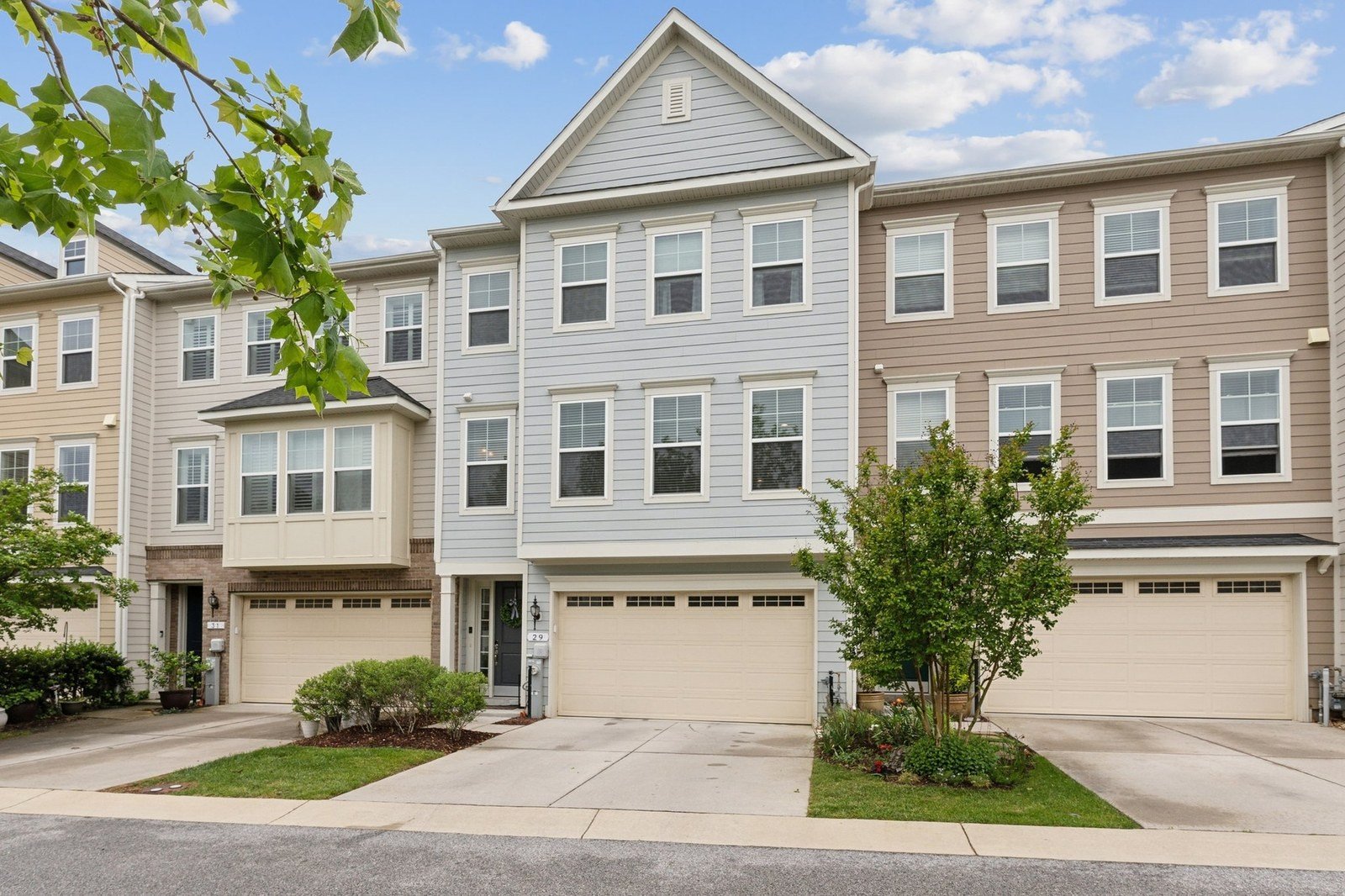
Should You Rent First or Buy Before Arriving?
Our view: rent first when the unresolved questions concern your life in the area. Buy when you have enough evidence about both the place and the purchase.
Temporary housing may make sense when your worksite could change, you have not tested the commute, or you need time to understand different locations. Its purpose is not to wait indefinitely for a perfect house. It is to learn something specific before making a larger commitment.
Give that plan a learning agenda and a review date. During the rental period, what will you test? Which locations will you compare? What evidence would make you ready to buy?
Buying before arrival can be reasonable when the location is well understood, financing is ready, and the property can be investigated thoroughly. But avoiding a second move is only one goal. Compare it with the risk of choosing the wrong place quickly.
For either route, price the actual arrangement: lease term, extension or termination provisions, pets, furnishings, storage, and a possible second move. There is no universal break-even period in this guide because the inputs belong to your household.
Prepare Financing and Representation Before the Tour Weekend
Tell your lender the whole relocation story at the beginning. A new job, remote-work arrangement, bonus, relocation reimbursement, or sale of another home should be part of the discussion—not a surprise after an offer is accepted.
Ask what documentation and timing the lender needs, which funds can be used, and whether approval depends on the old home selling. The CFPB distinguishes pre-approval from a guaranteed loan offer. Make sure the assumptions behind the letter match the move you are planning.
Set up the real-estate relationship just as deliberately. Maryland's Understanding Whom Real Estate Agents Represent notice explains agency relationships and states that a buyer who wants an agent to represent them must enter a written brokerage agreement. The notice itself is not that contract.
Review the agreement's services, scope, duration, compensation, and termination provisions before the showing schedule becomes urgent. Being unfamiliar with a state's paperwork is a reason to have it explained—not a reason to sign it hurriedly.

Learn the Property Questions Your Old State May Not Have Taught You
Relocation does not make every house complicated. It makes it important to notice where your existing assumptions may not fit.
Disclosure and Disclaimer Are Different
For transactions covered by Maryland's residential disclosure law, a seller can provide a disclosure statement or a disclaimer statement. A disclaimer still requires disclosure of actually known latent defects within the law's definition; it is not a finding that the property has no problems.
Have your agent explain the form, applicable exceptions, and how the purchase contract addresses inspections and other protections. Do not import assumptions from the documents used in your former state.
Ground Rent Belongs in the Title Review
Maryland maintains a ground-rent registry. Ask the title or settlement professional whether the property is subject to a ground lease and how any obligations or redemption would be addressed.
SDAT explicitly notes that it does not perform title searches or establish conclusively whether a property is subject to ground rent. Use the registry as a research resource, not a substitute for the title work.
Confirm Water and Wastewater Separately
Find out how the property receives water and handles wastewater. For private systems, ask for records and an appropriate evaluation rather than treating them as another box on a general home inspection.
Anne Arundel County's health department, for example, offers requests for septic layouts, site-plan information, and well-completion records. Request records early. Maryland also has licensing requirements for septic property-transfer inspectors; confirm the professional's qualifications for that work.
Near the Water, Separate Permission From Risk
Maryland's Critical Area generally includes land within 1,000 feet of tidal waters and tidal wetlands. A house does not have to sit directly on the shoreline for the rules to matter. Check the local maps and approvals before depending on an addition, pool, expanded paving, or tree removal.
That land-use review is different from flood-risk research. USGS identifies FEMA as the official public source for flood maps used for insurance purposes. Review the property's flood information and obtain insurance guidance separately. A planning designation and a flood map answer different questions.
Carry the same discipline into association documents, easements, historic restrictions, permits, and any planned home business or rental use. Ask whether the property can support the life you intend—not merely whether the current arrangement looks attractive.
Buying From Out of State Requires Better Evidence
A live video tour is useful, but it should do more than repeat the listing photographs. Ask to see the approach, parking, surrounding properties, storage, mechanical spaces, and the view from everyday rooms. Walk through how you would enter with groceries or move between floors.
Use photographs and video to prepare questions for the relevant professionals, not to replace their inspections. Know who will attend, how findings will be reviewed with you, and when decisions are due under the contract.
At the same time, coordinate the old and new addresses. Put the sale or lease end, financing conditions, settlement, possession, and moving delivery on one calendar. Ask what happens if one date shifts. The CFPB describes an accepted offer as the beginning of the closing process. Do not schedule the next purchase around sale proceeds as though they are already available.
Confirm signing and identity-verification arrangements with your lender and settlement team before booking travel. Do not assume that every part of closing can be completed remotely or that taking ownership and receiving possession will occur at the same moment.
Protect the Money Crossing Between Transactions
The CFPB warns about fraudulent mortgage-closing instructions. Establish a trusted contact and independently verified phone number early. Confirm wire instructions through that channel—not a number supplied in an unexpected email announcing a change.
A compressed move makes an urgent message feel plausible. Give yourself a verification process before urgency enters the conversation.
Choose the Interstate Mover as Carefully as the Moving Date
The Federal Motor Carrier Safety Administration recommends checking interstate movers' registration and obtaining written estimates. Its resources also distinguish movers from brokers. Know which company is arranging the move and which will handle the shipment.
Ask for the estimate assumptions, pickup and delivery windows, storage arrangements, responsibility for delays, and the protection offered for loss or damage. Review the inventory and ask what changes could affect the charge. A low headline quote is not enough to compare two different scopes of work.
Keep essential records, medications, identification, chargers, and the first few days' necessities accessible rather than relying on the truck's arrival. For a condo, tight street, or shared driveway, confirm delivery access and any reservation or parking arrangements before the shipment is on its way.
Leave some room between a tightly coordinated closing plan and a delivery commitment that is difficult to change. The most efficient-looking calendar is not always the most forgiving one.
After Arrival: The Maryland New-Resident Checklist
Getting the keys finishes the housing transaction. It does not finish the move.
Driver's License and Vehicle Registration
For drivers moving from another state, Maryland MVA directs new residents to obtain a Maryland license and title and register their vehicles within 60 days of becoming residents. Use its new-resident guide to prepare the documents and appointments for your situation. Military or other special circumstances should be checked with MVA rather than assumed to follow the general path.
For an incoming vehicle, review Maryland safety-inspection, insurance, title, and registration requirements. The safety inspection and emissions testing are separate. MVA also warns that missing the 60-day titling and registration window can disqualify a new resident from a credit for titling tax paid in another state. Budget the transaction, not just the plates.
Address, Accounts, and Household Services
USAGov explains how to arrange USPS forwarding and update government-agency addresses. Treat forwarding as one step, not a master update for every account. Work through payroll, financial accounts, insurance, healthcare, and subscriptions separately.
Confirm utility responsibility and service start dates, internet installation, trash and recycling arrangements, and any local permit or pet-registration questions. Keep school and medical records accessible, and complete the applicable enrollment and provider transfers.
For a purchased principal residence, follow up on the Homestead application discussed earlier. For a rental, retain the move-in condition record, lease, and any written arrangements about repairs or access.
Put the Move in an Order You Can Follow
Before choosing a location: establish the worksite and household schedule, budget, arrival deadline, and unresolved questions. Narrow the search to a manageable set of places.
Before committing to a home: test the routine, confirm financing and representation, review property-specific costs and restrictions, and decide whether renting or buying answers the situation better.
Before moving day: align settlement and possession with delivery, verify funds securely, arrange services, and keep a workable backup for delays.
After establishing residency: complete the applicable MVA tasks, account updates, enrollment steps, and ownership follow-up. Use actual legal and contractual deadlines—not a generic “first 90 days” list.
Keep watching three things while the plan develops: your employer's real attendance requirements, the school assignment for the relevant year, and updated financing, tax, and insurance figures. A change in one can alter the right housing decision without changing a single photograph in the listing.
Find Your Place—Then Choose the House
Moving to Maryland is an opportunity to be more intentional about where the week happens. The goal is not to reproduce your old life at a different address, or to make a permanent choice before you understand the alternatives.
Learn the places. Test the routines. Price the responsibilities. Then choose the home that brings those pieces together.
For the purchase process itself, the Housecats Homebuyer Roadmap takes the planning through search, offers, and closing.
Call (410) 991-1382 to talk through your Maryland move. We will start with where life needs to happen—and work toward the right home from there.
Research reviewed September 21, 2026. This guide provides general relocation information, not individualized legal, tax, lending, insurance, or enrollment advice. Confirm current requirements and property-specific details with the responsible professionals and agencies. Photographs come from the Housecats guide library and are illustrative; they do not identify current listings or establish property condition, price, or location.