
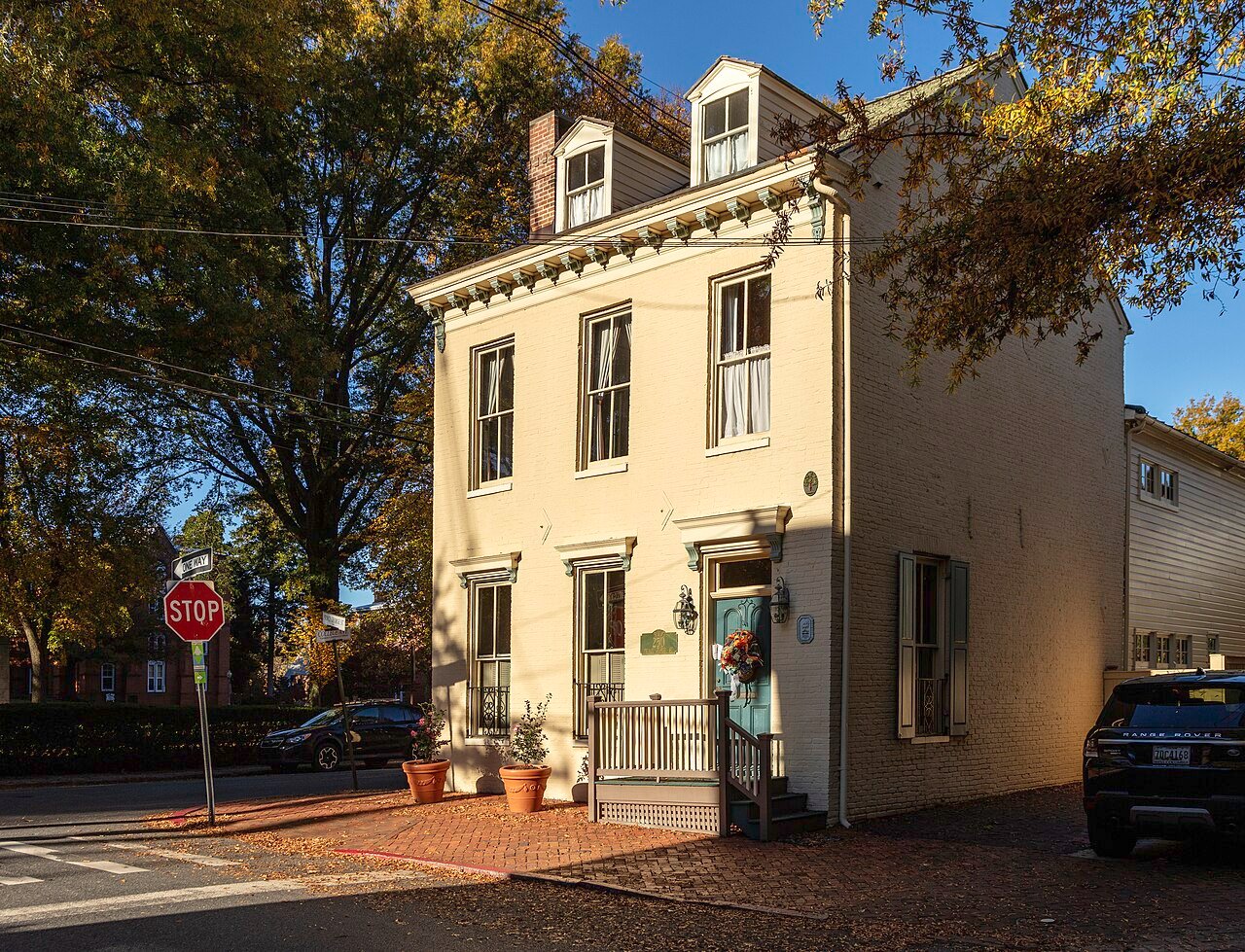
The window glass catches the afternoon light a little differently. The staircase has a shape you would never find in a production floor plan. Even the rooms seem to invite a different pace.
Then you picture a larger kitchen, another bathroom, or somewhere to put the laundry. That is the moment to ask a better question than whether the house has character: can you live well here while keeping what made you love it?
Buying a historic home in Maryland means bringing three things into agreement: the character you want to preserve, the condition you are taking on, and the changes you need to make.
Age alone cannot tell you whether the purchase is sensible. Neither can a plaque, a fresh renovation, or an appealing story. The right investigation looks at the building and the rules around it—and leaves room for the pleasure of owning something worth caring for.
Choose the Life, Not Just the Look
Compare a Baltimore rowhouse, an Annapolis townhouse, an Eastern Shore village home, and a rural farmhouse on their actual living arrangements. How do you enter with groceries? Where do you park? Which rooms require stairs? Does the layout give you enough privacy to work, host guests, or accommodate changing mobility needs?
Separate a well-maintained home that needs thoughtful updating from a substantial rehabilitation project. Those purchases require different amounts of cash, temporary housing, attention, and tolerance for unfinished work.
Write two lists: what you are buying the house to keep, and what must change for you to live there. If the second list would erase most of the first, reconsider the fit before negotiating the price.
Our view is not that an old home must stay frozen in time. It is that the purchase should make sense without depending on a transformation nobody has yet confirmed is possible.
 Find Out What “Historic” Actually Means for This Address
Several different labels can appear in a listing. They do not carry identical consequences.
An Inventory Entry Is Not a Designation
The Maryland Inventory of Historic Properties collects information about potentially historic resources. MHT explains that inclusion is not itself a designation and does not create legal restrictions or protections. A file number is useful research evidence, not a complete answer about what you may alter.
National Register Listing Is Not the Same as Local Design Review
The National Park Service explains that National Register listing alone does not restrict a nonfederal owner's work when no federal funding, license, or permit is involved. Separate state or local requirements may still apply.
Confirm whether the house is individually listed, lies within a listed district, or is only described as eligible. Do not turn “on the National Register” into either “nothing can change” or “no approvals are necessary.”
Local Designation Can Add an Approval Process
Local preservation programs operate through their own ordinances and review processes. Establish the exact district boundary or landmark designation and ask the responsible office which work requires approval.
In Annapolis, the Historic Preservation Division reviews exterior changes in the Historic District. Its advice is to consult staff and apply before signing a work contract or starting the work. A local preservation review and a building permit should not be treated as interchangeable approvals.
A Preservation Easement Travels With the Property
MHT's preservation easements bind future owners during their term. Each agreement is different; some are permanent. Obtain the recorded document and have your attorney review the protected features, maintenance duties, approval requirements, duration, and any public-access provisions.
Ask specifically about interiors, outbuildings, and the grounds. Do not assume that an agreement concerns only the front facade—or that National Register listing automatically means an easement exists.
The answer you need is a property-specific list of restrictions and decision-makers, not a yes-or-no answer to “Is it historic?”
Build the House's Record Before Building Your Renovation List
Start with MHT's Medusa database and the local preservation office. The MHT Library provides architectural survey files, photographs, maps, drawings, and supplemental research materials. These can help identify significant features and earlier versions of the building.
Then request the practical ownership record: permits, approved alterations, inspection reports, maintenance invoices, equipment information, and any unresolved notices or violations. Ask for the paperwork behind previous preservation approvals and tax-credit projects.
Compare those records with what is there now. Does the kitchen addition appear in the approved plan? Is the advertised construction date documented, or could it describe only part of the house? Which features are early fabric, later changes, or recent reproductions?
Keep documented history separate from an appealing anecdote. Where the record allows, learn about the people who lived and worked there—not only the best-known owner. You do not need a famous association to have a house with a meaningful past.

Inspect the House, Not the Birth Year
Choose an independent inspector with relevant older-building experience, then commission specialist reviews where the findings or proposed work warrant them. Ask what each inspection includes, which areas are inaccessible, and what remains untested.
We would organize the review around four questions:
- Where is water getting in or failing to leave? Examine the roof, flashing, gutters, drainage, basement or crawlspace, and evidence of earlier leaks.
- What is the structure doing? Have significant movement, altered framing, removed walls, or questionable additions evaluated by an appropriate structural professional.
- What condition are the systems in? Review electrical service and wiring, plumbing and drainage, heating and cooling, and any private well or septic system.
- What does your intended use require? Investigate chimneys before using fireplaces, and test the practical requirements of an added bathroom, changed layout, or occupied upper floor.
These are investigation categories, not a diagnosis of every older home. A sloping floor should not be dismissed as character or labeled a structural emergency without an evaluation.
Start With Moisture, Not the Cosmetic Fix
The National Park Service's moisture guidance emphasizes identifying the source before choosing a treatment. It addresses roof and ground drainage, materials, ventilation, and ongoing monitoring rather than offering one cure for every damp building.
For a buyer, the useful question is what caused the stain, soft wood, or damaged finish—and whether the cause was corrected. New paint tells you much less than a documented investigation and repair.
A New Material Is Not Automatically a Better Repair
Historic masonry is a good example. NPS guidance on repointing explains that replacement mortar must be compatible with the masonry and historic mortar in strength and vapor permeability. Harder is not automatically better; an incompatible mix can damage the materials it was intended to repair.
Ask contractors to explain the method, not merely name the task. “Repoint the wall” does not establish which mortar will be used, how joints will be prepared, or why that treatment fits the building.
Evaluate Windows Before Ordering Replacements
The Park Service's wood-window guidance considers condition assessment, repair, weatherstripping, and storm windows before replacement. It also recognizes that deterioration can reach a point where replacement is appropriate.
Get a window-by-window assessment where needed and review any required approvals. The choice is not between doing nothing and replacing every unit.
For comfort and energy use, consider the whole building. NPS recommends an energy audit before choosing efficiency improvements. Ask a qualified professional to consider air leakage, insulation, mechanical systems, ventilation, and moisture together. Do not let one product's sales pitch stand in for that review.

Make Lead and Asbestos Part of the Plan—not a Surprise During Work
For most housing built before 1978, federal lead-disclosure requirements include known information, available reports, required educational material, and contract disclosures. Buyers generally receive a ten-day opportunity for a lead inspection or risk assessment; the parties may change that period in writing, and the buyer may waive it.
A disclosure of no known lead is not a lead-free finding. Discuss testing and the inspection opportunity before you are under pressure to make the offer fit a deadline.
EPA recommends certified lead-safe contractors for renovation work in pre-1978 homes. Work that disturbs painted surfaces can create hazardous dust. Plan appropriate evaluation and safe work practices before sanding, demolition, or window work begins.
Asbestos generally cannot be identified by sight. EPA recommends leaving sound, undisturbed material alone and using trained, accredited professionals when evaluation or work is needed. Do not take samples yourself or assume everything suspect should immediately be removed.
These concerns are not unique to officially designated homes. They belong in the condition and renovation review because of the materials and work involved.
Can You Modernize a Historic Home? Ask About the Actual Changes
Rehabilitation, in the Secretary of the Interior's Standards, allows compatible use through repairs, alterations, and additions while retaining important historic features. It is not a requirement to return every home to a single moment in its past.
Bring an architect or designer experienced with older buildings a short, specific brief. Can the kitchen improve without removing the most important rooms? Can services be routed without sacrificing significant woodwork? Is there a workable accessible entrance or bedroom arrangement?
Ask which approvals each change requires, including any easement or incentive-program review. An interior project that falls outside a local exterior-review process may still matter under another agreement or tax-credit application.
Explore alternatives before accepting an all-or-nothing answer. But when an essential change is unsupported, treat that as a purchasing issue—not a problem to solve after closing.
Price the Purchase, the Catch-Up Work, and the Ongoing Care
Separate immediate safety and stabilization work from later maintenance and discretionary changes. Then obtain project-specific scopes from people who understand the materials and approvals involved.
Include design, engineering, applications, safe handling of hazardous materials where applicable, access or scaffolding, temporary housing, and a reserve for unresolved conditions. Mark which figures are written quotes and which remain provisional.
Compare the cost of a maintained home with the total cost of a cheaper one that needs work. There is no universal historic-home maintenance percentage or renovation premium in this guide. A compact rowhouse with documented repairs and a large neglected farmhouse are not equivalent budget problems.
Keep resale in perspective. We would examine comparable sales, condition, setting, layout, restrictions, and the quality of completed work. A historic label does not establish an automatic price premium, and restoration spending is not a promise of dollar-for-dollar resale recovery.

Confirm Financing and Insurance Before Removing Your Protections
Give the lender the condition findings and intended work early. Ask whether the purchase can close with the home as it stands or needs a renovation-financing structure, and what must be resolved before funding.
Fannie Mae's HomeStyle Renovation process, for example, includes lender review of renovation plans, an as-completed appraisal, and oversight of project draws. It is one option to investigate—not assurance that your house, contractor, or proposal qualifies.
Make the funding schedule agree with preservation approvals and the contractor's scope. A financing deadline should not depend on starting work before the relevant authority permits it.
Obtain an insurance quote for the actual property and your planned occupancy. The NAIC distinguishes replacement-cost coverage from actual-cash-value coverage and from market value. Ask how the proposed policy treats historic materials, rebuilding requirements, deductibles, and any period of renovation or vacancy. The purchase price is not a complete insurance specification.
Maryland Historic Tax Credits: Useful, but Not Automatic Renovation Money
Maryland's homeowner historic tax-credit program may provide 20% of eligible rehabilitation expenses, capped at $50,000 in a 24-month period. MHT's overview identifies a $5,000 minimum in eligible expenses and additional eligibility requirements.
The property generally needs to be an owner-occupied primary or secondary residence and a certified historic structure. Being old—or merely included in the inventory—is not enough. Confirm the property's qualifying route with MHT.
Approval comes before the work. MHT states that work begun before its review and approval does not qualify and can jeopardize the whole project's credit. Not every remodel or expense is eligible.
The application instructions distinguish property certification, proposed-work review, amendments, and certification of completed work and expenses. They also make clear that MHT approval does not replace local permits or other legal requirements. Keep the necessary photographs, approvals, invoices, and payment records.
The federal credit is different. NPS explains that the federal rehabilitation credit concerns qualifying income-producing property, not rehabilitation of a purely personal residence. Local incentives have separate rules. Have the relevant administrators and your tax adviser review eligibility, funding interactions, and any continuing conditions.
Budget the gross work first. Show a potential credit separately, with its remaining conditions, rather than subtracting hoped-for reimbursement from the cash you need to complete the project.
Planning to Rent It Out? Run a Separate Review
A successful homeowner plan is not automatically a lawful rental plan. Confirm permitted use, local licensing, occupancy, insurance, and any easement or association conditions before relying on rental income.
Maryland has separate lead registration and certification requirements for covered pre-1978 rentals, with applicable exemptions. MDE also notes that local jurisdictions may impose additional rental requirements. The property's historical significance does not substitute for compliance.
Discuss any change from personal use to rental use with the tax adviser and lender, particularly when incentives or owner-occupancy assumptions are part of the purchase.
Make the Offer Fit the Investigation You Need
Work with your agent and a Maryland attorney to identify the documents, professional access, deadlines, contingencies, and notice requirements the purchase needs. Separate a preliminary conversation with preservation staff from a written decision on a specific proposal.
Before proceeding, be able to answer four questions:
- What are we obligated to preserve? Identify the actual designations, agreements, and authorities.
- What work does the house need? Distinguish confirmed findings from unresolved concerns and cosmetic preferences.
- Can we make the changes essential to our life? Record the evidence, approvals still needed, and acceptable alternatives.
- Can we fund and carry the plan? Include insurance, financing conditions, timing, and costs before uncertain incentives.
If a necessary answer remains open, decide explicitly whether you need more time, different terms, or a different house. A low asking price does not resolve an unworkable essential change.
Become the Next Good Owner
At handover, collect the records behind the house: plans, permits, approvals, easement correspondence, warranties, contractor contacts, and maintenance history. Photograph existing conditions before work begins and retain records of what you change.
Address urgent safety and water problems first. Give yourself time to understand the building before launching discretionary work. Choose contractors for relevant completed projects and methods, not simply a willingness to say yes to the whole list.
Keep watching the written decisions on your proposed work, the findings that change its scope, and the budget needed before any incentive is received. Those are the practical signals that should move the plan forward—or cause you to revise it.
A historic home does not need to become a museum to be worth preserving. It needs an owner whose everyday life and approach to the building make sense together.
For the wider purchase process, read the Housecats Homebuyer Roadmap.
Call (410) 991-1382 to talk through your Maryland historic-home search. Start with the character you want to keep—and the evidence that makes the purchase work.
Research reviewed September 22, 2026. This article is general buying and preservation information, not a property-specific legal, tax, insurance, engineering, or environmental determination. Confirm current requirements and proposed work with the responsible professionals and authorities.
Header photograph: 250 Prince George Street, Annapolis, November 2021. Acroterion / Wikimedia Commons, CC BY-SA 4.0. Photographs illustrate architecture and historic documentation; they do not show current listings or establish present condition, approvals, or eligibility. No photographer, property-owner, institution, or government endorsement of Housecats is implied.