
The drive after a Sunday showing can make a house feel perfectly placed. The real test is Tuesday: getting out the door, reaching work on time, and making it home for the part of the day you wanted the house for in the first place.
A waterfront evening loses some of its appeal when you rarely get back before dark. A home near a station is less useful when the return train does not fit your shift. And a shorter route is not automatically the one you can depend on.
In the Chesapeake region, choose a home around a week you can repeat—not the best trip a map can produce. That means comparing the full journey, its cost, and what happens when something goes wrong.
This guide focuses on Maryland's Chesapeake communities and their connections to Washington and Northern Virginia. It is a way to evaluate commuting from Annapolis, Greater Baltimore, the Eastern Shore, and Southern Maryland—not a promise that every home in a town shares the same travel time.
First, Replace the City Name With an Actual Destination
“I work in Washington” is not enough to build a home search. Start with the building, entrance, or worksite you actually use. Then write down the days you must be there, the time you need to arrive, and the earliest and latest times you can leave.
Do the same for the trip home. A flexible morning does not solve a fixed pickup deadline. A nominal five o'clock finish does not help when your real departure depends on the last patient, a shift handoff, or a meeting that regularly runs over.
For a household with two workplaces, draw two complete journeys. A house halfway between the offices on a map may be inconvenient for both. Compare the frequency of each trip and the deadlines that cannot move, rather than giving every mile equal weight.
Our starting question would be: What does the house need to make possible on an ordinary workday? That answer belongs beside the budget and bedroom count.
A Good Commute Is About Reliability, Not Just Speed
The Federal Highway Administration distinguishes travel-time reliability from average travel time. The practical difference is how much additional time you need to allow to arrive when required.
Apply that distinction to a home search. Ask what the trip looks like on an ordinary day, what a disrupted day requires, and whether there is a genuinely different backup. Two driving routes that ultimately depend on the same bridge are not independent alternatives.
A train timetable describes a station-to-station service. Your commute also includes getting to the platform, waiting, making any transfer, and reaching the office. The same applies to driving: arriving near the building is not the end of the trip when parking and a walk remain.
Count the minutes you have to commit, not just the minutes the vehicle is moving.
Know Which Network You Are Using
MARC is Maryland's commuter-rail system. Its Penn, Camden, and Brunswick lines serve different corridors. Metrorail is the Washington-region Metro network. They can form parts of the same trip, but they are not the same service.
Baltimore has its own rail networks: Light RailLink connects the BWI/Glen Burnie branches with the corridor toward Hunt Valley, while Metro SubwayLink runs between Owings Mills and Johns Hopkins Hospital. “Near Metro” needs a city, a station, and a destination.
MTA's commuter-bus network adds longer-distance routes into employment centers. Read the actual weekday, direction, and stop pattern rather than assuming a route name means frequent service in both directions all day.
One distinction matters immediately to weekend workers: MARC's Penn Line has weekend service; the Camden and Brunswick lines do not have regular weekend service. Holiday arrangements also differ. A workable Tuesday itinerary is not evidence of a workable Sunday shift.
Annapolis and Central Anne Arundel: Compare Three Ways Out
For a Washington-bound search, compare driving the full trip, taking a commuter coach, and driving or connecting to rail. Annapolis does not appear as a station in MARC's station directory. A rail-based plan therefore needs a first leg beyond the city itself.
Route 220 connects Annapolis with Washington, with listed boarding points including the Rowe Boulevard/Taylor Avenue area, West Street, and Harry S Truman Park & Ride. Route 230 serves Severna Park and Annapolis; Route 260 serves Severna Park and Davidsonville. These are different stopping patterns, not interchangeable labels.
Compare each coach's Washington drop-off with your office and its afternoon pickup with your realistic departure. A useful seat into the city can still leave an awkward trip home. Conversely, a coach that fits both ends of the day may remove the need to park near work.
For a Baltimore-bound morning, check Route 210's Annapolis-area boarding points. Do not confuse that with Route 215's morning service from Baltimore toward Annapolis. Direction is as important as the route name. When evaluating a drive, use Maryland's CHART map to inspect the relevant I-97, US 50, and connecting-road conditions—not a county-wide commuting label.
The useful housing distinction is often the first part of the trip: reaching the highway, the park-and-ride, or the rail station. Test that from the property itself. A town name cannot tell you how easily you will leave a particular street.
The Eastern Shore: Decide How Much Your Week Can Depend on the Bridge
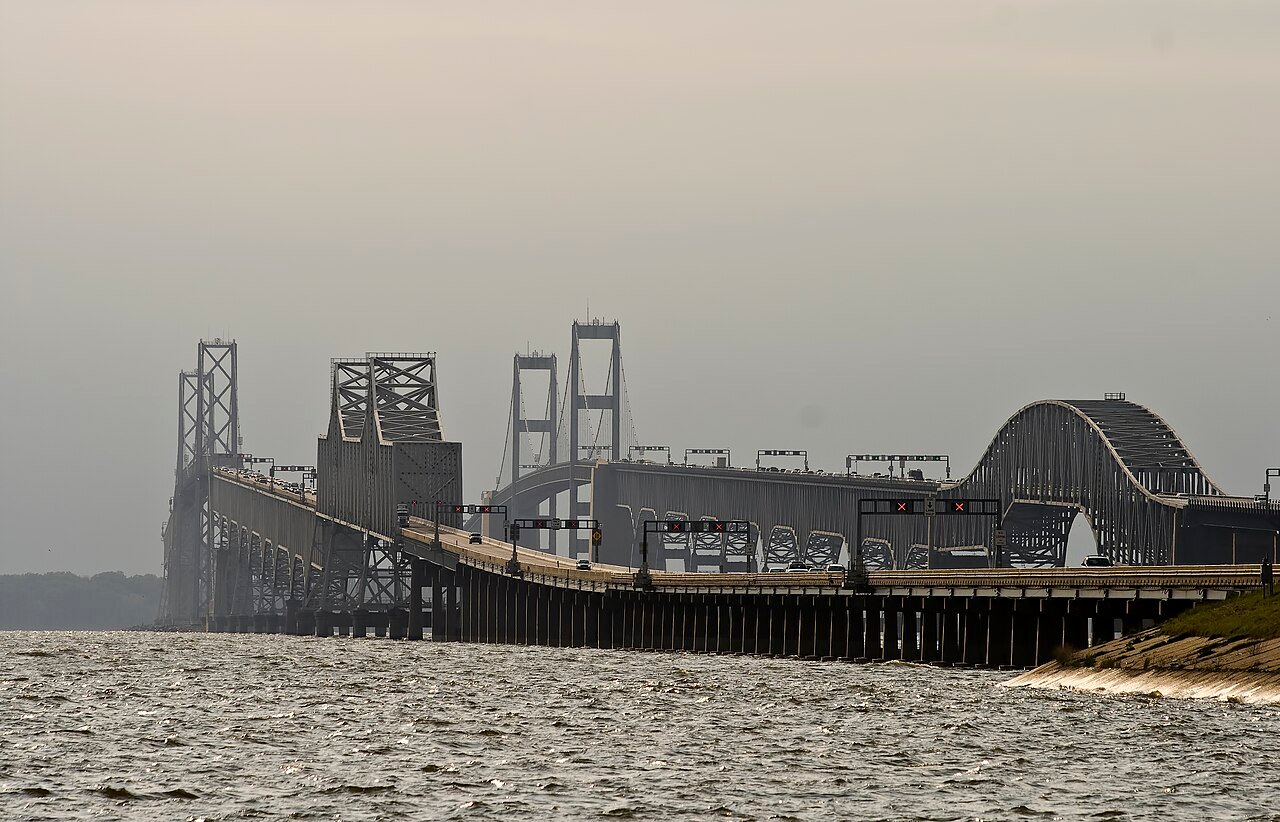
For a Kent Island household commuting west, the Bay Bridge is part of the recurring journey, not just the scenic approach to home. Queen Anne's County identifies weekday cross-bridge commuter options, including park-and-ride access on Kent Island.
Route 240 connects Kent Island with Washington. Route 250 serves Kent Island and Davidsonville toward Washington, while Route 210 offers Baltimore-bound service with Kent Island and Annapolis-area boarding points. Confirm the stop you need on the trip you intend to take; not every departure should be assumed to serve every point.
A cross-bridge coach can change how you spend the journey. It does not eliminate the crossing's role in the route. That is the distinction between reducing the work of driving and removing a transport dependency.
Test the return leg just as carefully as the morning. MDTA's 2026 Fourth of July travel advisory is one documented example of seasonal traffic affecting the crossing. It is not a standing forecast for your commute. Check current Bay Bridge advisories for your actual travel dates.
The housing question is not whether crossing is inherently a bad choice. It is whether your work schedule, home commitments, and alternative plan can accommodate it. Occasional office attendance and an inflexible daily arrival are different decisions.
Do not make every Eastern Shore search about Washington, either. For employment within the region, start with the actual destination and investigate MUST's Mid-Shore transit connections. A local job and a cross-Bay job should not inherit the same housing map.
Odenton, BWI, and Howard County: Rail Access Is Only the Beginning
Odenton, BWI Rail Station, Halethorpe, and New Carrollton are Penn Line stations; Dorsey, Savage, and Laurel are on the Camden Line. A Crofton, Gambrills, Elkridge, or Columbia search needs to distinguish those corridors before deciding which station is convenient.
For an Odenton-based plan, test the station approach, parking, platform access, and the train that fits your destination. For Fort Meade or another controlled-access workplace, ask the employer which entrance and any authorized shuttle you can actually use. A nearby station does not establish access to a secure worksite.
Even “BWI” needs precision. The airport provides a shuttle between the rail station and terminal. A terminal job, a rail-station arrival, and an office in the surrounding business district are different endpoints.
Howard County also has coach options worth comparing before committing to a station drive. Route 203 links Columbia and Bethesda. MTA's route directory also lists Columbia–Baltimore service on 310 and several Columbia-area Washington routes. Choose by workplace and stopping pattern, not the general direction of the city.
For someone considering a home near rail, the practical advantage is the service they can use. It is not a guaranteed property-price premium or a promise that every shift will work.

Greater Baltimore: The Arrival Side Matters
Baltimore Penn Station and Camden Station are separate destinations. Before choosing a MARC itinerary, locate the arrival station in relation to the office, hospital, campus, or other worksite—not simply “Baltimore.”
For a north–south journey, compare the Light RailLink corridor. For an Owings Mills–Johns Hopkins Hospital journey, examine Metro SubwayLink. Towson, Hunt Valley, downtown, and a hospital campus require different last-mile checks even when a regional map makes them look connected.
For commuters coming from the northeast, MTA's directory lists options including the Churchville–Baltimore 410 and Havre de Grace–Johns Hopkins 420. Again, verify the workplace-side stop and hours rather than assume a route to the city reaches the part you need.
Build today's trip around today's crossings. The Francis Scott Key Bridge replacement remains a construction project, not an available I-695 crossing. MDOT maintains Key Bridge commuting resources. Do not base a current home decision on a future reopening or an old route description.
Southern Maryland: Washington and Patuxent River Are Different Searches
Start a Southern Maryland commute with the employer's location. A household traveling north to Washington has a different daily problem from one traveling to a worksite near Patuxent River. Neither can be summarized as “the Southern Maryland commute.”
For Washington connections, Route 620 serves Waldorf, Route 725 serves California and Charlotte Hall, and Route 840 serves St. Leonard and Prince Frederick. These examples give you starting points, not a substitute for the complete timetable and park-and-ride plan.
For a Calvert–St. Mary's journey, identify whether the trip uses the Governor Thomas Johnson Bridge on MD 4 over the Patuxent River. SHA's May 2026 maintenance notice illustrates how an overnight work window can matter to a shift worker; it should not be read as an ongoing closure notice.
At a military or industrial worksite, confirm the gate, employee parking, access requirements, and any usable shuttle with the employer. For a local transit connection, use MTA's directory of locally operated systems to reach the relevant county operator. The commuter coach into Washington and the local trip to work are separate services to investigate.
Washington and Northern Virginia: Finish the Journey on the Map
Reaching Washington is not the finish line for someone headed to Arlington, the Pentagon, Tysons, or Reston. Use WMATA's current map and trip planner to connect the actual arrival point with the workplace. Union Station, a downtown coach stop, and a Maryland Metrorail station start you in different places.
New Carrollton, Greenbelt, Downtown Largo, and Branch Avenue are among the Maryland stations to investigate when comparing a drive-to-Metro plan. Do not select one solely because it is closest to home. Compare the line, destination, any transfer, and the final walk or employer connection.
Check the particular parking facility's terms and availability. Then read the train's destination board and the itinerary for your travel date. A remembered line map or old bus number is not a dependable substitute for current service information.
A seat on transit may offer a different experience from driving. Decide honestly whether you would use the ride to read, work, or decompress—and whether the transfers and schedule fit well enough to make that benefit real.

Hybrid Work Changes the Arithmetic, Not the Need to Test It
Run the comparison using the days you actually commute. Do not multiply everything by five out of habit—or assume an informal two-day arrangement can never change.
An illustration, not a regional travel-time estimate: a difference of 15 minutes each way, three office days a week, over 46 commuting weeks equals 69 hours in a year. Change those inputs to match your situation. The point is to make recurring time visible without pretending every route behaves the same way.
For money, separate per-trip costs from fixed costs. Compare fuel or charging, tolls, parking, fares, and any additional household transport needs. Add maintenance and other vehicle costs when evaluating the full ownership picture. Ask your employer about any available transit, vanpool, or parking support before assuming the out-of-pocket amount.
A Bay Bridge Discount Is Only a Discount When It Fits Your Use
At the September 2026 review, MDTA lists the two-axle Maryland E-ZPass Bay Bridge toll at $2.50 and its commuter plan at $35 for 25 trips, valid for 45 days or until used. Tolls are collected eastbound. DriveEzMD explains that unused plan trips are charged and are not refundable.
That makes attendance frequency relevant. For illustration, using only ten crossings from a $35 plan means $3.50 per used crossing in plan tolls, compared with $2.50 under the listed standard Maryland two-axle rate. This is arithmetic under stated assumptions, not a recommendation for every account. Check current eligibility, other available plans, and all applicable charges.
The broader lesson: compare the package you will actually use, not just its advertised per-trip price.
The Backup Plan Should Be Written Before You Need It
For a transit commute, work backward from the last usable departure—not simply the latest train anywhere on the line. Check how a late meeting, missed connection, service change, or inaccessible station entrance would affect the trip.
Ask about accessible boarding, elevators, walking distances, and pickup arrangements where they are relevant to you. Do not turn “transit available” into a claim that a particular door-to-door itinerary meets every rider's needs. For a bicycle connection, check the route to the stop and the operator's boarding or storage rules before counting it as part of the plan.
Commuter Connections offers carpool matching, vanpool resources, and commute-planning tools. Sharing a ride may make an otherwise awkward pattern worth investigating. Confirm the group's work hours and how it handles different office days before counting on it.
Guaranteed Ride Home Has Important Limits
The program's participation guidelines describe up to six authorized rides annually for eligible commuters using qualifying alternatives at least twice weekly. Registration, geographic eligibility, and other conditions apply.
Eligible circumstances include unexpected illness or a family emergency and qualifying unscheduled overtime. Transit disruptions or delays are expressly excluded. It is not general insurance against a missed train. Review the rules, including authorization and operating hours, and keep a separate plan for ordinary service problems.
A Five-Part Commute Test Before You Choose a Home
Use the same test for each serious location. It gives your comparison something firmer than an attractive map screenshot.
- Define the real week. Record both household workplaces, required days, arrival times, likely departure times, and nonnegotiable home commitments.
- Build the whole trip. Include the home-to-stop leg, parking, waiting, transfers, final walk or security check, and the return journey.
- Try it under relevant conditions. Travel on the workdays and at the times you would use. Compare more than one observation; record what happened rather than treating one trial as a reliability study.
- Test the failure case. Identify the last practical connection, a missed-departure plan, shared bridge or tunnel dependencies, and the cost of the alternative.
- Compare the household result. Put time, cash costs, flexibility, and the home itself on the same page. Include the other person's trip rather than optimizing one commute in isolation.
For day-of conditions, pair CHART with MTA service alerts and the relevant operator's trip planner. Live information helps with a departure decision; it does not establish a home's long-term commute performance.
A short test can expose a bad fit. It cannot establish what the trip will take across an entire year. That is why this guide does not assign a blanket “35–50 minutes” to an entire town.
What to Watch Before the Next Move
MARC's announced through-service change. MTA lists September 28, 2026 as the start of a weekday Brunswick–Camden through connection. The announced pattern is one morning trip toward Baltimore and one evening return, linking selected stations without going through Washington Union Station. At this article's September 21 review, the start date was still ahead.
That may be useful for a matching work pattern. It is not all-day service, not the opposite-direction morning commute, and not a reason to ignore the accompanying changes to existing trains. Confirm the implemented timetable before relying on it.
Crossings that are actually available. Follow the Key Bridge project's construction updates and current Bay Bridge advisories. Distinguish a future improvement from a route you can use now.
Your employer's schedule. Revisit the plan when required office days, a worksite, or shift hours change. A location that fits one pattern deserves a fresh test when the pattern moves.
The Chesapeake lifestyle is not separate from commuting. The trip determines how much of that lifestyle you get to use.
Choose the home with the return journey in mind. The right fit is not necessarily the shortest trip. It is the combination of place, cost, and routine that leaves room for the life you are moving to enjoy.
When you are ready to connect that daily-life map with a home search, continue with the Housecats Homebuyer Roadmap.
Research reviewed September 21, 2026. Routes, schedules, fares, toll plans, access conditions, and projects can change. Confirm the exact trip with the operator and test it from the property. Examples are planning illustrations, not guaranteed travel times, individualized financial advice, or predictions of property value.
Header photograph: Chesapeake Bay Bridge from Queen Anne's County, May 2011. Acroterion / Wikimedia Commons, CC BY-SA 4.0. Photographs illustrate place and infrastructure, not current traffic, construction, or service conditions. No transport agency or photographer endorsement of Housecats is implied.